Dalí Museum
(St. Petersburg, Florida) Most people visiting the Dalí Museum in St. Petersburg, Florida, probably don't realize that one of the largest collections of Salvador Dalí's work in America began as a private collection in suburban Ohio. What is now a major cultural institution, housed in an impressive waterfront building, started with a husband and wife who simply developed an extraordinary interest in one artist.
The story begins in 1942, when Reynolds and Eleanor Morse attended a Salvador Dalí exhibition at the Cleveland Museum of Art. Fascinated by his work, they purchased their first painting the following year as a belated wedding gift to themselves. That purchase began a decades-long relationship with Dalí and his wife Gala, eventually growing into one of the most significant private collections of his work in the world.
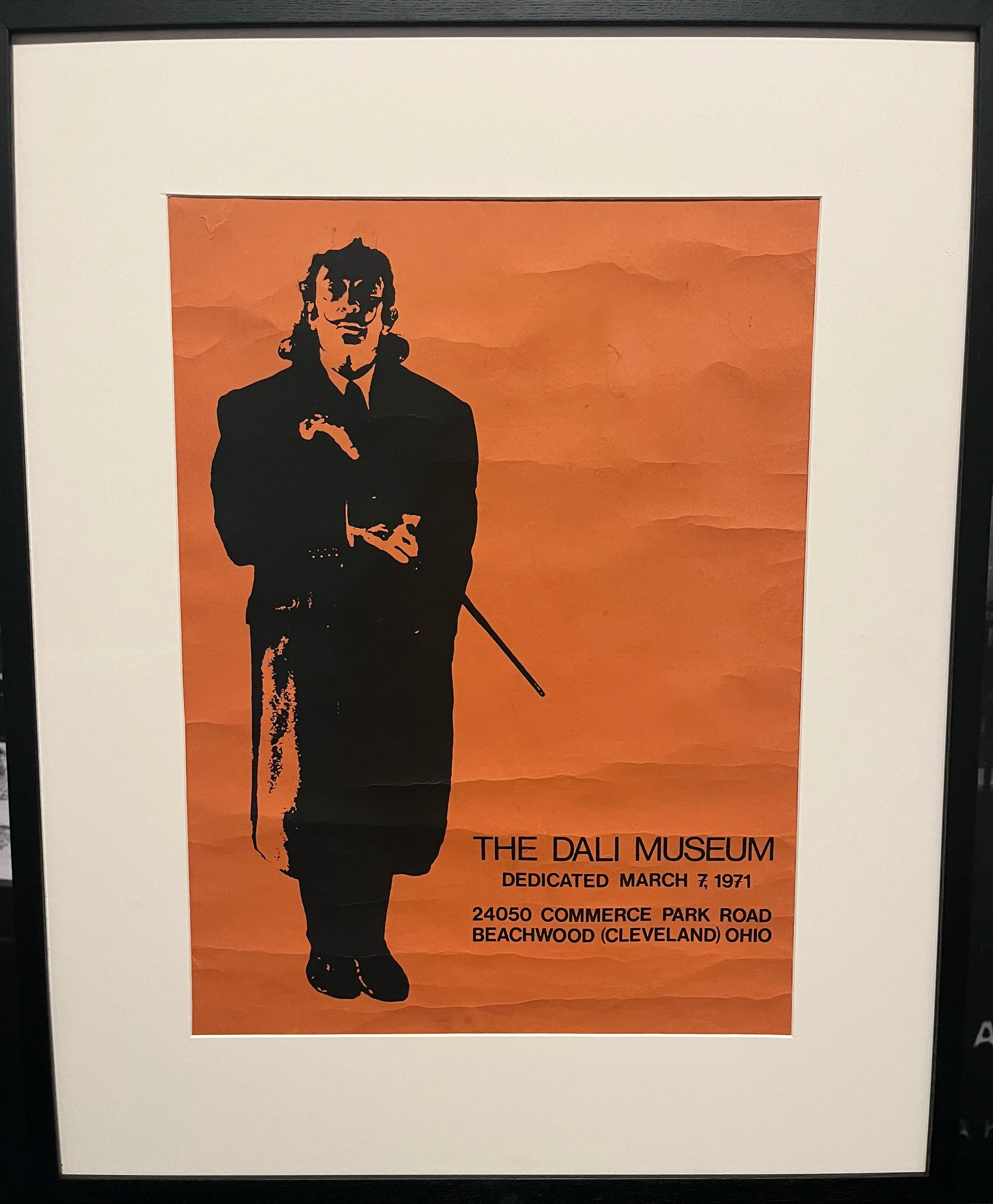
For years, the Morses displayed their growing collection in their Cleveland home. By 1971, they had accumulated enough artwork to open a small museum in Beachwood, Ohio, adjacent to Reynolds Morse's business. Dalí himself attended the opening. It's an unusual origin for a museum of this significance, particularly considering that its founders were not professional curators or museum directors, but enthusiastic collectors who wanted to share their passion.
As the collection continued to grow, the couple began searching for a permanent home where the artwork could remain together. After several unsuccessful possibilities, a newspaper article caught the attention of civic leaders in St. Petersburg, Florida. The city rallied around the opportunity, and in 1982, the Dalí Museum opened in a converted waterfront warehouse. What began as a personal hobby in Ohio had become a major cultural attraction hundreds of miles away.
The museum's current home opened in 2011, designed by architect Yann Weymouth of HOK. The building is an interesting architectural response to both its collection and its coastal location. A relatively straightforward concrete structure, designed to protect the artwork from hurricanes, is interrupted by an enormous free-form glass enclosure known as the Enigma. Made from more than a thousand triangular glass panels, the sculptural façade feels appropriately surreal against the otherwise restrained building. Inside, a sweeping helical staircase continues the contrast between rational construction and unexpected geometry.
I recently visited the museum and found the exhibition documenting its architectural history almost as interesting as the artwork itself. Seeing photographs of the original Ohio location alongside the current building makes the museum's evolution particularly remarkable. It's a reminder that major cultural institutions don't always begin with grand architectural ambitions or enormous endowments. Sometimes they begin with two people collecting something they love.
Of course, Dalí himself remains the attraction. His surrealist paintings, strange compositions, and extraordinary technical ability continue to challenge the way we interpret familiar objects and spaces. There is something fitting about a museum dedicated to an artist who made a career out of reimagining reality having such an unlikely history of its own.